
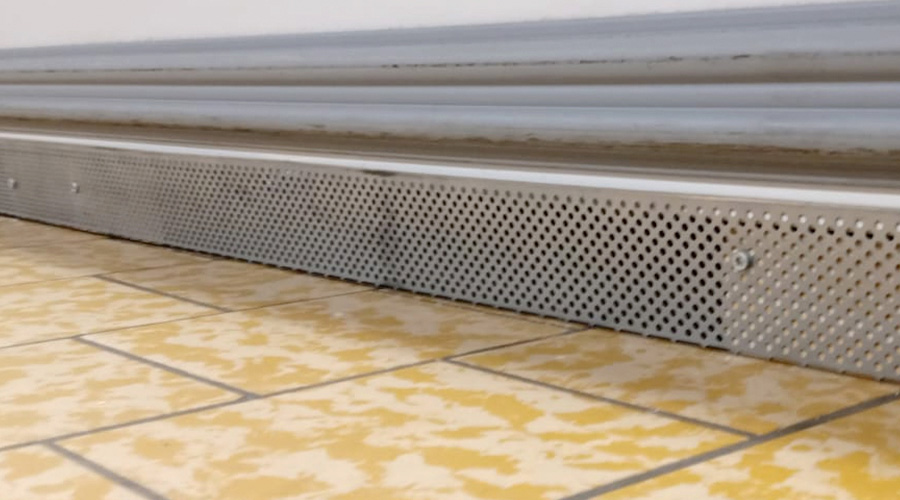
Find and close access points
As a pest controller with more than 20 years of experience, I always say: “The best rat control is preventing them from getting in,” he says.” Because once rats are inside, it is much more difficult and expensive to remove them. Let me explain how to rat-proof your home.
How Small Can a Rat Go Through?
This surprises many people: a rat can pass through a 2-centimetre opening. Yes, really. Their skull is the only hard structure - the rest of their body is flexible. If their head fits through, their whole body fits through.
What does this mean? Any hole larger than 2 cm is potentially an entrance for rats. And rats are good at making small holes bigger by gnawing. A 1 cm hole today, could be 3 cm tomorrow.
Where do you look for holes?
Okay, you need to find holes. But where do you look? Let me give you my checklist - this is what I do on every inspection.
Around the foundation: Look along your entire house at ground level. Look for gaps between the ground and your wall, holes where cables or pipes go through the wall, damaged vents, cracks in the concrete or masonry.
At doors and windows: Cracks under doors (especially garage door, shed, utility room), broken window frames, holes in screens, loose panels at basement windows.
Ventilation and exhausts: Air vents without fine mesh, dryer or extractor hood drains without flaps, open ends of drain pipes.
Roof and facade: Loose or broken roof tiles, holes at gutter attachment, gaps around chimney, open ends of downspouts.
My tip: do this during the day and at night with a torch. Sometimes you can see light shining through cracks, betraying openings.
Which Materials Work For Rat Control?
You have found a hole. Now you need to seal it. But not every material works - rats can gnaw through many things. What does work?
Iron mesh or steel mesh: Mesh size maximum 6 millimetres (preferably 4mm). This is the best material. Rats cannot gnaw through it. Use it for vents, holes around pipes, larger openings.
Metal sheet metal: Aluminium or steel, at least 1mm thick. Perfect for larger holes, under doors, around window frames. Screw it on tightly - rats can otherwise push it loose.
Concrete or cement: For holes in masonry or foundations. Mix it well - loose mortar will gnaw them away in no time. Let it harden completely.
Polyurethane foam + mesh: Foam alone does NOT work (rats gnaw through it). But if you place netting first and spray foam over it, it does work. The combination is strong.
What does NOT work: Normal foam (nibble through), Putty or sealant (dig out), Wood (nibble through - a wooden board is not an obstacle), Rock wool (pull out), Plastic (nibble through within a few hours).
Last month, I had a customer who had filled all the holes with foam. He thought he was done. Two weeks later: rats were back. They had gnawed through the foam like it was cheese. We redid everything with mesh, and now it's closed.
Would you like to ask a question or make an appointment?
Sewerage: the main route of rats
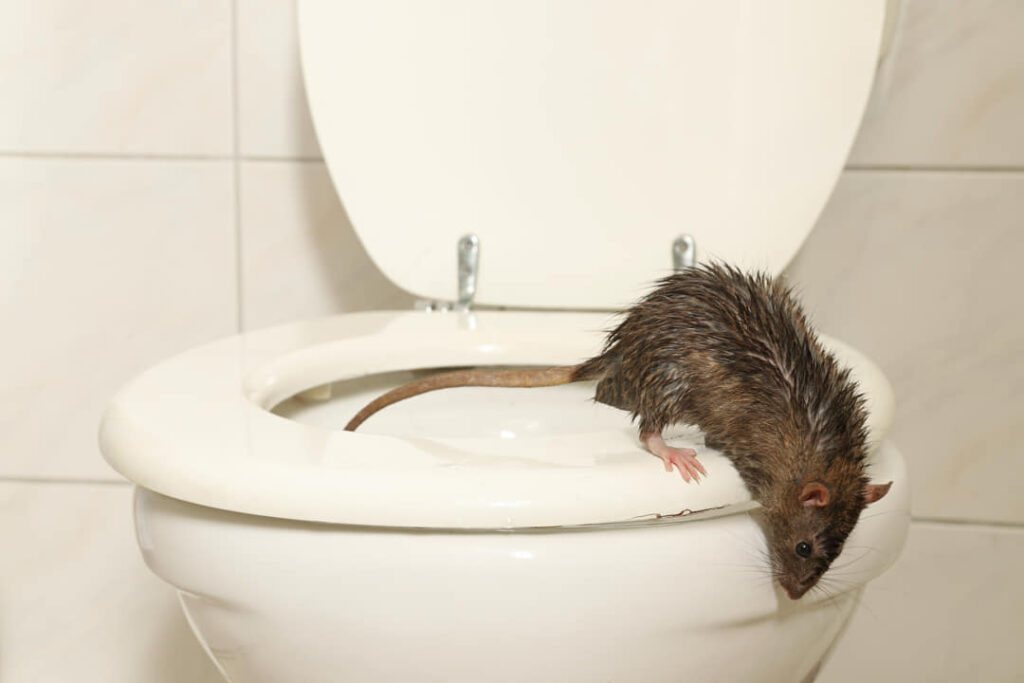
Many people do not realise that rats can enter your home through your sewer system. And I mean literally: through your toilet. This sounds like a horror story, but it happens more often than you think. Let me explain how it can and how to prevent it.
Can Rats Really Get In Through The Toilet?
Yes. Rats live in sewers - there it is warm, there is water, and there is food (human waste). They swim perfectly, can hold their breath for 3 minutes, and can climb vertically in slippery pipes.
How it works. A rat climbs into your house sewer from the main sewer pipe. It swims up through the drain pipe. He enters your toilet through the siphon. It climbs out. Done. Now you have a rat in your house.
This mainly happens in old sewers with damage, in houses in low-lying areas (where rats can easily reach your house from the sewers), during extreme rainfall (sewers fill up, rats seek higher).
Check valves: Your Best Defence
The solution? A non-return valve in your sewer drain. This is a valve that allows water to pass through (from your house to the sewer), but not the other way. Rats can't get through it.
Where do you place them? On your house's main drain (where your house sewer connects to the municipal sewer). This protects your whole house. Near the toilet (in the drain pipe before the siphon). This is extra protection. At basement drains and sink basements.
Cost? A good non-return valve costs €50-200, depending on the size and quality. Installation by a plumber costs €100-300. Sounds a lot, but it's a one-off investment that protects your home.
I advise anyone in high-risk areas (low lying, old sewer system, history of rat infestation) to do this. It will save you a lot of misery and expense in the long run.
Drains And Sinks
Not just the toilet - other drains are also risk points. Rats can climb through drain pipes, especially if the pipes go straight up.
What can you do? Install fine-mesh grids (<10mm) on all drains outside. Check your drains regularly for damage (cracks, holes). Flush drains regularly with hot water (this removes food particles that rats will pick up on). Place non-return valves on vulnerable drains (basement, garage).
Maintaining Your Sewerage
A broken sewer system attracts rats. If your sewer pipes have cracks, sewage leaks into the ground. That attracts rats, and through those cracks they enter your house.
How do you know if your sewer system is broken? Annoying smell at your house (rotting, sewer smell), wet spots in your garden with no obvious cause, more frequent blockages in your drains, if your house is old (>40 years) and your sewer has never been replaced.
My advice: every 10 years, have your sewers inspected with a camera. A sewer company can do this for €150-300. If there is damage, repair it immediately. It not only prevents rats, but also much more expensive repairs later.

Making garden rat proof
Many rat infestations start in the garden. If your garden attracts rats, sooner or later they will enter your house. A rat-proof garden is the first line of defence. Let me explain how.
Bird food: The Biggest Problem
This always surprises people: bird food is one of the biggest rat attractors. You want to help birds, but you are also feeding rats along with them. Because rats like to eat bird seed, and they find it nice and easy - it just lays on the ground.
What can you do? Hang bird feeders high (at least 1.5 metres, preferably higher). Use feeders with catch trays under the feed (so spills don't fall on the ground). Feed only during the day (take the feeder inside at night). Clean up spillable seed daily. Stop feeding between April and October (birds find enough in the wild then, and it is rat moulting season).
If you have a lot of rats around, consider stopping feeding birds. I know that's unfortunate, but rats in your house is worse.
Compost: Right Way Or Not At All
Compost can be fine, but in the right way. Because wrongly done compost is a rat magnet.
WELL on the compost: Vegetable and fruit peels, plant residues, cut grass (in thin layers), egg shells.
NOT on compost: Meat, fish, dairy, cooked food, bread, fat/oil. This attracts rats tremendously.
Compost bin: Use a closed compost bin (not an open heap). Place it at least 20 cm away from fences and walls. Put netting under the bin (rats dig in from underneath). Turn the compost over regularly (rats do not like disturbance). If you see a lot of rats: stop composting temporarily.
Storage In Garden And Barn
Rats seek shelter. Clutter in your garden provides that. What should you avoid?
Piles of wood on the ground (put wood on pallets, at least 30cm off the ground). Full sheds with boxes and stuff (tidy up, make it orderly). Old furniture, car trunks, material you are “going to use again” (do you really? If not, get rid of it). Dense vegetation against walls and fences (keep 50 cm clear).
Why. Rats make nests in sheltered places. If you don't give them those places, they will go elsewhere. Make your garden uncluttered - you'll see more quickly if there are rats, and they'll find fewer hiding places.
Fences And Gates: Fence
Rats use fences as highways - they walk along them, sheltered from above. And holes under fences are highways into your garden for them.
What can you do? Seal holes under fences with metal sheeting or mesh (bury to 20cm deep, otherwise rats will dig underneath). Place mesh strips along the underside of wooden fences. Check gates - there are often large gaps there. Remove ivy or vegetation on fences (rats use this to climb in).
For wooden fences: rats sometimes gnaw holes. If you see holes, seal them with netting. If your fence is old and rotten, consider replacing it - a sturdy fence is better protection.
Would you like to ask a question or make an appointment?
Maintenance: Fence continues to work
Rat control is not a one-off action. It's something you have to maintain. Rats are persistent and resourceful. They are constantly looking for new entrances. Let me explain to you how to make sure your warding continues to work.
Regular inspection
How often should you check? I recommend at least twice a year - spring and autumn. Why these periods? Spring: rats become more active, you see damage caused in winter. Autumn: rats seek shelter for winter, you prepare your home.
What do you inspect? Walk around your whole house, checking all the places where you have previously plugged holes. See if the mesh is still intact, if cement has cracks, if metal is still secure. Check your fence and gates for new holes. Check for new gaps (houses move, especially in clay soil).
Signs of rats? Droppings (fresh are shiny black, old are grey), gnaw marks on wood, plastic or cables, walkways (dark oily streaks along walls or fences), holes that appear larger than before.
Season: Extra attention in autumn and winter
Rats are active all year round, but in autumn and winter they seek warmth and shelter. This is when they try extra hard to get inside. This means you need to be extra vigilant during this period.
What to do. September/October: do a thorough inspection, close all holes before winter sets in. December/January: check for new gaps. Watch out for snow and frost - these can make gaps bigger. March: check damage after winter, repair where necessary.
After Storm Or Work
Extreme weather or construction work can damage your rat guard. When to check extra?
After storm: Strong winds can loosen roof tiles, damage downspouts, make fences move. Check everything after a storm.
After extreme rain: Water can leach out cement, soil can sink causing cracks. Check your foundation and drains.
After work: Contractors sometimes leave holes open, or create new openings. After each job, check that everything is still rat-proof.
Last year, I had a client who had his roof renovated. The roofers had left an opening near the downspout open. Within two weeks: rats in the attic. We sealed it, but it could have been prevented with a check after the job.
Professional Inspection And Warranty
If you do it yourself, that's fine. But sometimes it is wise to have a professional look at it. When?
If you have had rats before (then your house is apparently vulnerable). If you live in a high-risk area (low-lying, old neighbourhood, known rat problem). If you have done a major renovation project. If you want to know it was done really well.
What do I do as a professional? I inspect your entire house and garden. I find openings that you might miss yourself (I have 20+ years of experience with it). I close all gaps with the right materials. You get advice on maintenance. You get a guarantee on my work - if rats do get in through a place I've sealed, I'll come back at no extra cost.
Cost? A professional rat repellent costs between €300-800, depending on the size of your house and how much needs to be sealed. Sounds a lot, but it's an investment. Once you have rats inside, control costs €500-1500+. Plus the damage rats do. So prevention is cheaper.
Frequently asked questions about rat extermination
These are the questions I get most often about keeping rats out. Is your question not among them? Feel free to call me for personal advice.
Keeping rats out is done by sealing all openings larger than 2cm with the right materials. Inspect your entire house for gaps at the foundation, doors, windows, ventilation, and roof. Seal them with steel mesh (mesh <6mm), metal sheeting, or concrete - no foam or wood. Install non-return valves in your drains. Make your garden unattractive: no bird food on the ground, closed compost bin, no clutter or accumulation. Check twice a year (spring and autumn) that everything is still closed. Rat-proofing is not a one-off but requires maintenance.
Yes, rats can literally get in through your toilet. They live in sewers, can swim perfectly, hold their breath for 3 minutes, and climb vertically in slippery pipes. They climb from the main sewer into your house sewer and enter your toilet through the siphon. This happens especially in old sewers, in low-lying areas, and during extreme rainfall. The solution: install non-return valves in your sewer drain. These let water through but not rats. Cost €50-200 per valve plus installation €100-300. A one-off investment that protects your home.
Materials that work: steel mesh or iron mesh (mesh size max 6mm, preferably 4mm), metal sheet metal (aluminium or steel, min 1mm thick), concrete or cement (well mixed and cured), polyurethane foam WITH mesh (mesh first, then foam over it). Materials that do NOT work: normal foam alone (gnaw through), putty or sealant (dig out), wood (gnaw through), rock wool (pull out), plastic (gnaw through). Rats can gnaw through almost anything except metal and good concrete. Therefore, always use steel mesh or metal for repellent.
A rat can pass through a 2-centimetre opening. Yes, seriously - their skull is the only hard structure, the rest is flexible. If their head fits through, their whole body fits through. An adult rat (without a tail) is 20-25cm long, but can fit through a 2cm hole. This means you need to seal ALL openings larger than 2cm. Rats can also make small holes bigger by gnawing. A 1cm hole can become 3cm within a day. This is why it is important to seal even small gaps immediately.
You can do it yourself, but a professional is wise if: you've had rats before, you live in a high-risk area (low, old, known rat problem), you have a large house with many potential entrances, you're not sure if you've sealed everything properly. A professional finds openings you miss yourself, uses materials that really work, and guarantees his work. Cost: €300-800 depending on your home. This sounds like a lot, but rat control costs €500-1500+, plus damage. Prevention is cheaper. Professional extermination is also essential for businesses because of reputation and permits.
Make an appointment with a professional pest controller now
Make an appointment with our certified pest controllers now! If you complete the form below, we will contact you to make an appointment directly make