
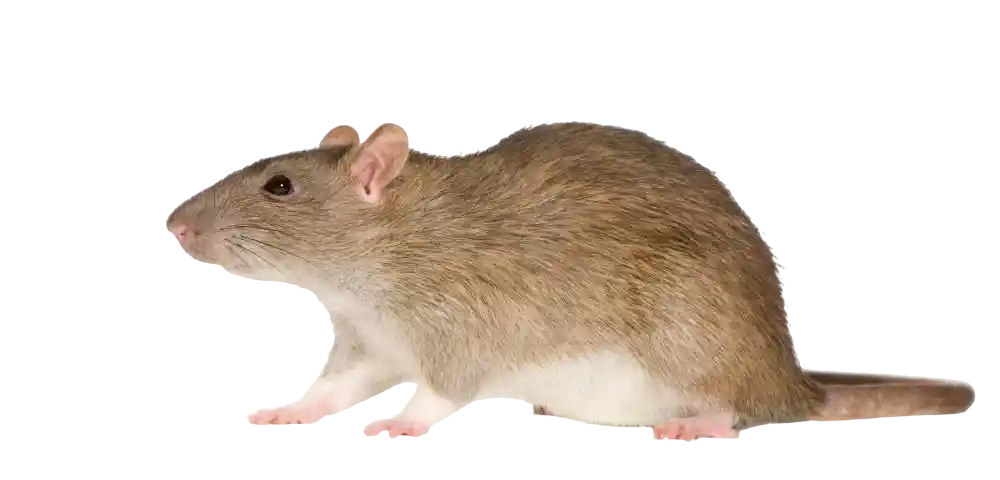
Brown rat or black rat? Here's how to tell the difference
The correct recognition of rats in the Netherlands begins by distinguishing the two main species: the brown rat and the black rat. Indeed, this knowledge is essential for effective control and prevention.
The Brown Rat (Rattus norvegicus)
The brown rat, also called sewer rat or Norway rat, is by far the most common species in the Netherlands. This rat is large and robust with a body length of 20-28 centimetres, excluding the tail. Its fur is therefore grey-brown in colour with a lighter belly.
Characteristic of the brown rat are its small ears and eyes in relation to its body. The tail is also shorter than the body and has clearly visible scales. Brown rats weigh between 200-500 grams and have a stocky, muscular appearance.
The Black Rat (Rattus rattus)
The black rat, also called ship or roof rat, is less common in the Netherlands. This species is slimmer and more elegant than the brown rat, with a length of 16-24 centimetres. Despite the name, its fur is not always black - it is often dark grey or brown.
In contrast, the black rat has large eyes and ears in proportion to its body. The tail is also longer than the body, which is an important landmark. This rat is an excellent climber and therefore often lives in attics and trees.
Behavioural differences
Brown rats live mainly on the ground, in basements and sewers. They then dig elaborate burrows. Black rats, on the other hand, are baum dwellers who nest up high. In fact, this behavioural difference helps in recognition of rats in the Netherlands Based on the site.
Would you like to ask a question or make an appointment?
These tracks betray that you have rats
At the recognition of rats in the Netherlands the tracks they leave are often the first and clearest clues. This is because rats are nocturnal animals and usually stay hidden during the day.
Excrement: The Most Distinctive Track
Rat droppings are the most reliable clue. Brown rats produce droppings about 10-20 millimetres long, cylindrical with rounded ends. They are dark brown to black and have a shiny appearance when fresh. In contrast, old droppings are dry and dusty.
Black rats have smaller droppings of about 6-13 millimetres with pointed ends. The shape also looks more like a banana. An adult rat produces 40-50 droppings per day, so large quantities indicate a serious infestation.
Walkways and Lubrication tracks
Rats always use the same routes between nest and food source. Along these paths, wear and tear marks are therefore created by the oily fur. Look for dark spots along skirting boards, walls and beams. Especially in dusty rooms, these marks are particularly visible.
In gardens, you may additionally see stepped-out paths in the grass or soil. Rats actually create small tunnels about 7-10 centimetres wide.
Gnaw marks
Rats need to gnaw constantly because their teeth are growing through. Therefore, look for gnaw marks on wood, plastic, cables and pipes. Fresh gnaw marks are lighter in colour and have sharp edges. Old gnaw marks are dark and rounded.
Sounds and smells
Rats make noises at night such as scratching, squeaking and scratching. A sharp, musty smell also indicates rats - as this is due to their urine. A heavy rat infestation has a pungent, distinctive smell that is hard to miss.

How do rats get into your home (and how to prevent it)?
For effective recognition of rats in the Netherlands and prevention, it is essential to understand why rats settle near homes. Indeed, several factors attract these rodents.
Food sources and waste
Rats are omnivores and are therefore attracted to any food source. Uncovered dustbins, composting areas, bird food and pet food scraps are strong attractants. Even small amounts of food are sufficient - in fact, rats only need 15-30 grams per day.
In gardens, fallen fruit, vegetables and seeds attract rats. Stored food in sheds, garages and utility rooms also pose a risk. Moreover, rats can gnaw their way through cardboard and plastic to reach food.
Water and Moist Environments
Rats need water on a daily basis. Leaking taps, condensation, ponds and ditches therefore offer ideal sources of water. Basements with moisture problems and sewers are also very attractive. Rats like to nest near water supplies.
Shelters and nesting sites
Rats seek warm, sheltered places to nest. Unused spaces such as crawlspaces, attics and sheds are ideal. In addition, rats like to nest in piles of wood, rubbish, dense vegetation and behind stored items.
Buildings with many entry points are also vulnerable. This is because rats can get through openings as small as 1.5-2 centimetres. Holes around pipes, damaged facades and open vents provide access.
Would you like to ask a question or make an appointment?
Why rats are really dangerous (This you need to know)
The timely recognition of rats in the Netherlands is crucial because of the serious health risks. Indeed, rats are carriers of numerous diseases and parasites dangerous to humans and pets.
Diseases Transmitted by Rats
Rats spread diseases through urine, faeces, saliva and bites. Weil's disease (leptospirosis) is a serious bacterial infection that causes flu-like symptoms and can lead to liver and kidney failure. Transmission occurs through contact with contaminated water or surfaces.
Salmonella and E. coli can be spread through food contamination when rats walk over kitchen countertops or food supplies. In addition, rats can spread hantavirus, a rare but life-threatening lung disease.
Parasites and Allergens
Rats carry fleas, ticks and mites that can transmit diseases to people and pets. Moreover, these parasites remain in homes even after rats are gone. In addition, rat urine and fur causes allergic reactions in sensitive individuals, especially children.
Structural Damage
Besides health risks, rats cause considerable material damage. They gnaw electrical wiring, causing fire hazards. They also damage pipes, insulation and wooden structures. The cost of rat damage quickly runs into thousands of euros.
Effective Preventive Measures
Prevention starts with removing food sources. Therefore, use sealed dustbins, store food in rat-proof containers and clean up food scraps daily. In addition, remove fallen fruit and make sure pet food scraps are not left outside.
Seal all access points larger than 1.5 centimetres. Use metal mesh, steel wool or cement - as rats can gnaw through many materials. Repair holes around pipes, ventilation and in facades.
Questions about rats? I am happy to answer them
These are the questions I get most often about rat recognition and control. Still in doubt? Call me, then I will help you further. - Johan
Rats are considerably larger than mice - an adult brown rat is 20-28 cm long (excluding tail) versus 7-10 cm for a mouse. Rat droppings are 10-20 mm in size, while mouse droppings are only 3-8 mm. Rats have thick, heavy tails with visible scales, while mice have thin, hairy tails. In addition, rats are much more cautious and shy away from new objects, while mice are curious. Finally, rats make coarser gnawing marks 4-5 mm wide.
If you see one rat, there are probably many more. Rats are nocturnal and very shy - if one appears during the day, this indicates overcrowding or food shortage, both signs of a large colony. A rule of thumb is: for every rat you see, there are 5-10 hidden. A pair of rats can produce 200+ offspring within a year under ideal conditions. See a rat? Call a professional immediately for inspection.
Yes, rats pose serious risks. They bite when they feel threatened - rat bites can cause infections such as rat bite disease. Rats spread diseases through urine and faeces that babies and toddlers can touch. For pets, rats are carriers of parasites and can inflict serious injuries in fights. In addition, poison bait eaten by rats can be lethal to dogs and cats that eat the rat. With children or pets in the house, professional approach is essential.
Brown rats prefer to nest low: crawl spaces, basements, behind kitchen cupboards, in cavity walls, under floors, in sewers and behind washing machines/dryers. Black rats nest higher: attics, between ceilings, in cavity walls (high up), gutters and chimney. Rats seek warm places close to food and water. They build nests from torn insulation, paper, textiles and other soft material. Nests are often 20-30 cm in diameter and contain young.
Never touch rat droppings with bare hands. Always wear disposable gloves and a dust mask (FFP2 minimum). First moisten droppings with a disinfectant to prevent dust - dry droppings can release dangerous particles on contact. Wipe up with paper, place in a plastic bag, seal and discard. Then disinfect the surface thoroughly. Then wash hands with soap. For large quantities of droppings, Pest Control Janssen recommends professional cleaning - call 085-2129904.
Make an appointment with a professional pest controller now
Make an appointment with our certified pest controllers now! If you complete the form below, we will contact you to make an appointment directly make