
What are woodworms anyway?
As a pest controller with more than 20 years of experience, I regularly get the question: “Johan, do I have woodworms?” People see holes in wood, or find sawdust, and are not sure what it is. Let me explain what to look out for.
The Name Isn't Quite Right
“Woodworm” is actually a misleading name. Because they are not worms, but larvae of small beetles. The common woodworm is the larva of the common wood beetle. That beetle lays eggs in wood, and the larvae that hatch eat their way through the wood.
Why is this important? Because you have two problems: the larvae that get into the wood and do damage, and the adult beetles that fly out and lay new eggs. You need to deal with both.
The Life Cycle: From Egg to Beetle
Let me explain how it works, so you'll better understand what to look out for. The beetle lays eggs in cracks of wood in summer (May-August). Preferably old, soft wood with 12-18% moisture. Then the larvae hatch and eat their way through the wood. This takes 2 to 5 years - yes, really that long!
During this time, they make tunnels and burrows, producing wood sawdust (we call it borer meal). When the larva is fully grown, it pupates just below the surface. After a few weeks, the beetle hatches and bites its way out. This creates a 1-2mm round hole. The beetle only lives for a few weeks, but during that time it lays new eggs. And the cycle begins again.
Which Beetles Cause Woodworms?
In the Netherlands, we have mainly three species. The common woodworm is by far the most common - holes of 1-2mm, light borings, in soft wood. This is what most people call “woodworm”.
Then you have the splitwood beetle, which is mainly in tropical hardwoods (mahogany, teak). Especially in new furniture. And the furniture wood borer in old antiques. But I rarely see the latter.
Just last month: a customer thought he had woodworms in his new teak table. Turned out to be splinter wood beetles, which were already in the wood when he bought the table. Unfortunately, this is not unusual with tropical hardwood.
Would you like to ask a question or make an appointment?
Recognition: these signs give away woodworms
OK, you suspect woodworms. But how do you know for sure? Because you usually don't see the larvae themselves - they are safe in the wood. You have to look at the tracks they leave behind. Let me explain what to look out for.
Exit holes: The Most Noticeable Sign
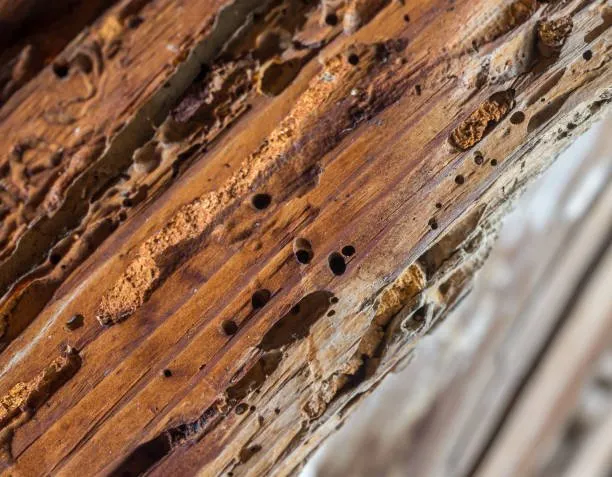
This is often the first thing people notice. Small, round holes in wood. In common woodworm, these holes are 1-2 millimetres in diameter - about the size of a pinhead. They look neatly round, as if drilled with a mini drill.
Important: fresh holes have light, clean edges. Old holes are often dark coloured. Fresh holes mean that beetles have recently hatched - the pest is still active.
Where do you find them? Often in places you don't immediately see. Undersides of chairs and tables, backs of cupboards, roof beams in the attic, wooden floors (especially in cracks), and old window frames.
Drill flour: The Evidence
Borage is the waste product of the larvae. As they chew through the wood, sawdust comes out of the holes. You often find this as small piles under the hatches or in crevices.
What does it look like? In common woodworm, it is light coloured (cream to light brown), granular - looks like coarse sawdust or breadcrumbs. And you often see small oval pellets in it.
Want to know if the pest is active? Wipe away all the borer meal. After a few weeks, check for new borer meal. If so, there are active larvae in the wood.
I always do this during inspections. It is the best way to see if an infestation is active or stopped long ago. Many old houses have holes from decades ago, but no longer an active pest.
Tunnels in The Wood
If you break open or cut through deteriorated wood, you will see a network of tunnels and corridors. The wood is hollowed out on the inside, while the outside still appears reasonably intact.
This is where it gets dangerous. Because you can't always see from the outside how serious the damage is. A beam can look solid but be completely eroded inside. That is structurally dangerous.
Just last week: a customer with a wooden floor that felt creaky. We picked up a board, and it had gone out for 70%. The floor still looked good, but barely had any load-bearing capacity left. That was really dangerous.
Adult Beetles See
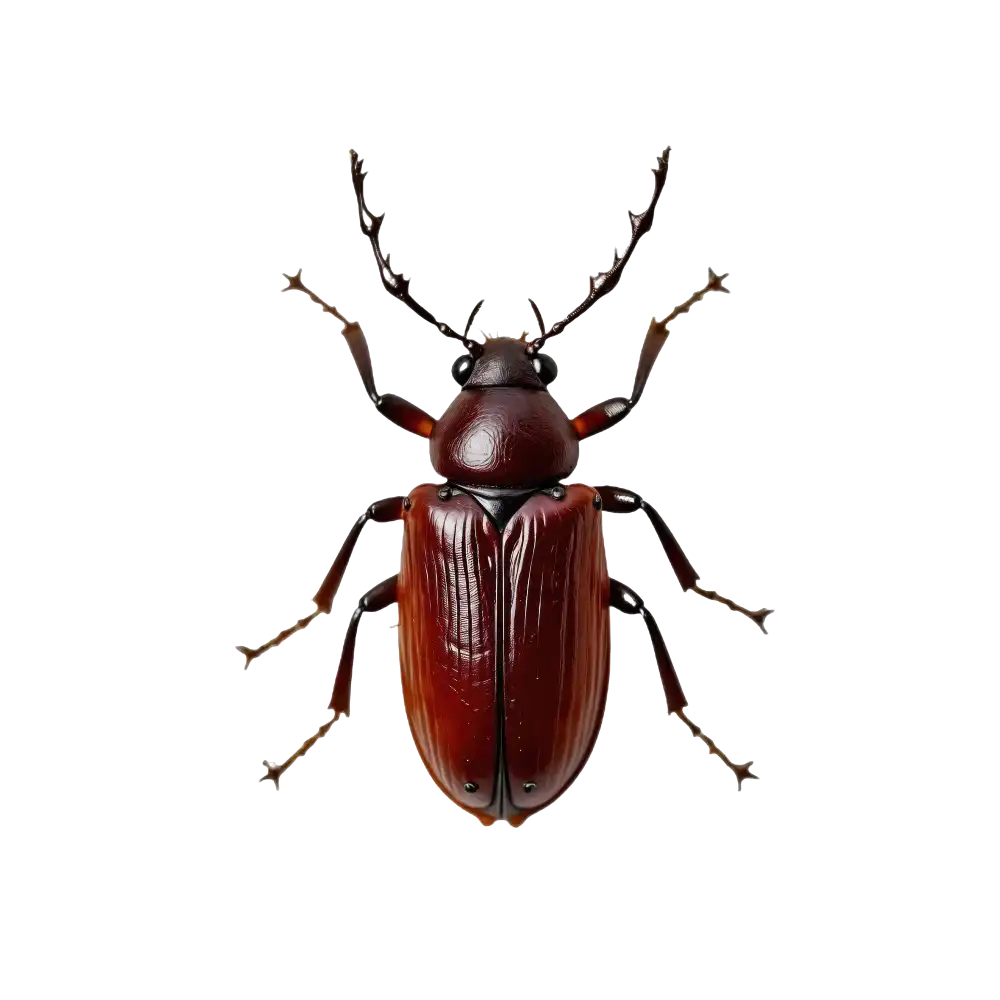
In the summer months (May-August), you sometimes see the adult beetles. They are small - 3-5 millimetres long, dark brown to black, oval-shaped. And they can fly, though they don't like to do so.
You often find them on window frames (are attracted to light), on the ground under infested wood, or dead in cobwebs. If you see beetles, you have an active infestation.

Which wood is vulnerable to woodworms?
Good thing you asked! Because not all wood is equally sensitive. If you understand which wood is at risk, you can check more specifically. Let me explain.
Wood type: Soft vs Hard
Woodworms prefer soft wood. Why? Because the larvae can eat their way through it more easily. Spruce, pine, fir - that is used in roof structures, floors, window frames. These are all vulnerable.
Elm and poplar wood are also sensitive. And old oak, especially the sapwood (the outer layers).
Which is less vulnerable? Tropical hardwoods such as teak and mahogany. But beware: these can get splinter beetles. Newly treated wood and impregnated wood are also safer.
What I often see: old wooden floors of spruce are hugely sensitive. So are roof beams made of old softwood. But modern laminated beams rarely have woodworms because they are made of treated wood.
Age of The Wood
Old wood is more fragile than new wood. Why? Because old wood often already has cracks and damage where beetles can lay their eggs. Also, the protective layer (paint, varnish) is often worn.
Antique furniture is extra risky. I regularly get reports from people who have bought an old cabinet or chair, and it turns out to have woodworms. The infestation comes into the house with them.
Moisture: The Crucial Factor
This is important: woodworms thrive best at 12-18% wood moisture content. Dryer or wetter, and they cannot survive well. This is why you see woodworms mostly in damp spaces: basements, crawl spaces, bathrooms, old sheds, poorly ventilated attics.
Also in wood with moisture problems: roof leaks, rising damp, condensation, poorly ventilated wooden floors.
My experience: if you address moisture problems, you often solve the woodworm problem too. Dry wood (under 10% moisture) rarely gets new woodworms. The larvae already in it grow much more slowly or die off.
Location in House
Certain places are riskier. High risk: crawl spaces and basements (damp, dark), old attics with untreated roof beams, old wooden floors in damp rooms, window frames exposed to rain.
Medium risk: old wooden furniture, wooden stairs, panelling. Low risk: modern laminated furniture, treated construction wood, dry well-ventilated rooms.
Last month, I had a client with woodworm damage in the bathroom floor. Turned out there had been a small leak at the shower for years. The wood was permanently damp - perfect for woodworms. We fixed the leakage, replaced the floor, and now the problem is gone.
Would you like to ask a question or make an appointment?
Damage from woodworms: Why you need to act fast
You might be thinking, “It's just a few holes, how bad can it be?” Well, let me be honest: woodworms can cause enormous damage. And the worst part is that you often don't see it until it's too late. Let me explain why.
Structural Damage: The Real Danger
Woodworms eat the wood from the inside. The outside may still look reasonably good, but inside it is a network of tunnels. The wood loses its strength and load-bearing capacity.
Where does this become dangerous? In load-bearing structures. Roof beams can collapse under snow loads. Floor joists can sag or collapse. Stairs can break during use. Window frames lose their strength.
I have stories from customers where a roof beam collapsed during a storm. The beam looked reasonable on the outside, but it was gouged for 80%. That is life-threatening.
That's why I always say: if you suspect woodworms in load-bearing parts, have it checked immediately. Don't wait for it to get worse.
Spreading to other wood parts
Woodworms do not stay neatly in one place. When adult beetles fly out, they look for new wood to lay eggs in. Often in the same room, but sometimes further away.
What I often see: it starts in an old wooden floor. Then it spreads to skirting boards, door frames, stair treads. And eventually even to furniture. Before you know it, you have woodworms in several rooms.
This is why early control is so important. The earlier you intervene, the less likely it is to spread.
Cost of Recovery
The longer you wait, the more expensive it becomes. Treating an incipient infestation might cost €500-€1000. But if you need to replace beams, repair window frames, or renovate floors, you're soon talking tens of thousands of euros.
Just last week: a client had ignored woodworms for years. In the end, we had to replace three roof beams. The total cost: €12,000. If he had tackled it five years earlier, it would have been €800.
Speed of Damage
How fast does it go? That depends on humidity and temperature. In ideal conditions (humid, warm), larvae can do a lot of damage in 2 years. In less favourable conditions, it takes 4-5 years.
But beware: because the cycle takes 2-5 years, you often have several generations at once. If you see fly holes, it usually means the infestation has been going on for years. Visible damage is just the tip of the iceberg.
Therefore: if you suspect woodworms, call me immediately. I come by for a thorough inspection, assess the damage, and advise you on the best course of action. Early intervention will save you thousands of euros.
Frequently asked questions about Woodworms
These are the questions I get most often about woodworms. Is your question not among them? Feel free to call me for personal advice.
Woodworm holes are small, round holes of 1-2 millimetres - about the size of a pinhead. They look neatly round, as if drilled with a mini-drill. Fresh holes have light, clean edges and you can often see light drilling flour around them. Old holes are darker. If you see fresh boron flour, the pest is active. Test this: wipe away all the boron flour and check for new ones after a few weeks.
No, woodworms are not dangerous to humans or pets. They don't bite, don't sting, don't spread disease. The danger is in the damage to wood. They can weaken load-bearing structures, causing beams to collapse. This is dangerous, though. They can also destroy valuable furniture. So while the bugs themselves are harmless to your health, the structural damage is a problem.
In different ways. Through old or used furniture that is already contaminated (antiques, second-hand). Through untreated wood you bring in (firewood, building materials). Adult beetles that fly in in summer and lay eggs in suitable wood. Or they are already in the house (in old beams, floors). Moisture problems also make wood attractive. Woodworms love wood with 12-18% moisture. Basements, crawl spaces and poorly ventilated areas are more at risk.
For a small infestation, you can try using remedies from the hardware store. But frankly, it rarely works well. Why not? The larvae are deep in the wood (up to 2 cm), and DIY remedies often only penetrate 2-3mm. Without experience, you miss affected areas that still look good on the outside. And you don't address the underlying cause (moisture). For serious infestation, load-bearing structures, or valuable furniture, I always advise a professional. They have stronger tools and the experience.
Prevention revolves around four things. Keep wood dry (below 12% moisture) by proper ventilation, repair leaks, address moisture problems. Preventively treat vulnerable wood with woodworm repellents, especially in damp areas. Check regularly: annually check attic, crawl space, old furniture for holes and boron flour. And inspect second-hand furniture thoroughly before bringing it inside. If in doubt: leave it outside or treat it first. This will prevent you from bringing in an infestation.
Make an appointment with a professional pest controller now
Make an appointment with our certified pest controllers now! If you complete the form below, we will contact you to make an appointment directly make