
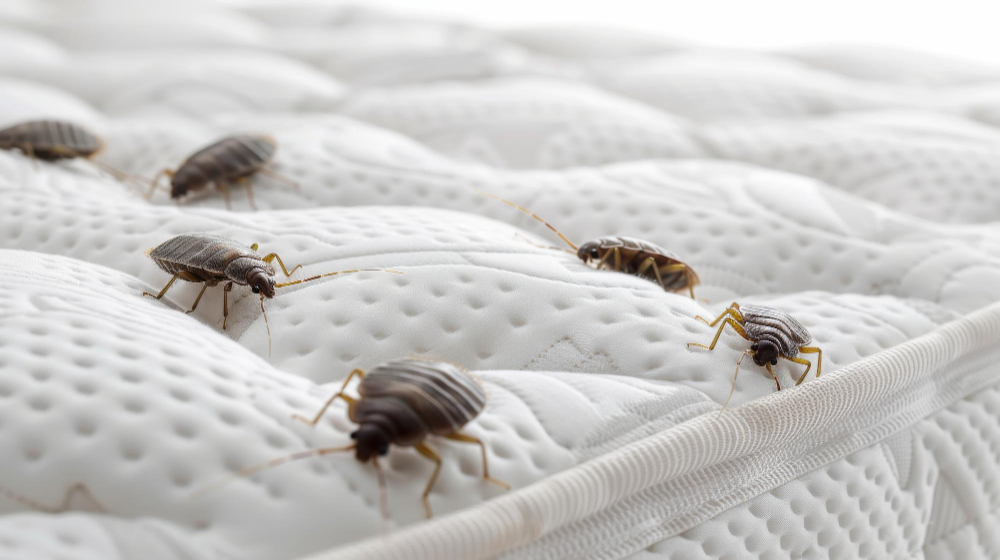
Recognising bedbugs: what do they look like?
I often get the question: “How do I know if I have bedbugs?” The answer starts with recognition. Because if you know what bedbugs look like, you can detect them faster. Let me explain what to look out for.
Adult Bedbugs: Size and Colour
An adult bedbug is about 5-7 millimetres in size - about the size of an apple seed. They are flat and oval-shaped, a bit like a small lens-shaped bean. The colour? Reddish-brown, but after a blood meal they darken and swell.
What I often hear from customers: “I thought it was a tick!” That's right, because they look like one. But bedbugs have six legs (ticks have eight) and are flatter.
Nymphs: The Young Bedbugs
This is where it gets tricky. Because young bedbugs - we call them nymphs - are much harder to see. They start out tiny (1 millimetre, the size of a pinhead) and are almost translucent white. After each moult, they get bigger and darker.
Why is this important? Because you often don't take action until you see adult bedbugs. But by then, you usually already have a big problem, because those nymphs have been there for weeks or months.
Where are Bed Bugs Hiding?
Trust me, bedbugs are masters at hiding. I have found them in the strangest places. Their favourite places:
In and around the bed: Mattress seams, the bottom of your mattress, headboard, slatted base, bed frame (especially wooden frames with gaps).
Near sleeping spots: Behind wallpaper that comes loose, in sockets, behind paintings, in cracks of bedside tables, between books on your bedside table.
In case of heavy infestation: Everywhere - in clothes in the closet, behind skirting boards, in electronics, even in lamps. If you find them there, you really have a problem.
Would you like to ask a question or make an appointment?
Spores of bedbugs: Here's what to look out for
Okay, you don't see any bedbugs. Does that mean you don't have them? Not necessarily. Because bedbugs leave clear traces. And I see those tracks before the critters themselves. Let me teach you what to look out for.
Bites and itching: The first signal
Most people only notice bedbugs through bites. You wake up with itchy bumps, often in a row of three (we call it “breakfast, lunch, dinner”). The bites are usually on areas that are exposed while sleeping: arms, legs, neck, face.
But beware: not everyone reacts to bedbug bites! About 30% of people don't get an itch. So no bites does not automatically mean no bedbugs.
Bloodstains on your Sheets
I often see this during inspections. Small, rust-red stains on sheets, pillow or mattress. What's that? You flattened a bedbug while sleeping, or there is blood on their droppings.
Tip from me: use light sheets. Dark sheets hide these marks.
Black Spots: Bed bug droppings
Sorry for the topic, but this is crucial. Bedbugs defecate where they walk. And those droppings are little black dots, about the size of the tip of a felt-tip pen. They are often in places where bedbugs hide: mattress seams, behind the headboard, in cracks.
Want to know if it really is bedbug droppings? Rub it with a damp cloth. If it smears into a reddish-brown stain, it is their excrement (because it is digested blood).
Replacement skins
Bedbugs moult five times before they reach adulthood. And they just leave those old skins. They are transparent, light brown shells that look like empty bedbugs. If you find them, you know for sure that there are (or were) bedbugs.
The Smell
In a major infestation, you can smell them. Really. It's a sweet, musty smell - a bit like spoilt raspberries or old wet towels. Some colleagues say coriander, but I find it more muf-sweet.
If you smell that smell in your bedroom, call me. Because then you have a serious problem.

How do you get bedbugs? (And how to prevent it)
Good thing you asked! Because many people think bedbugs come from dirt. That's really not true. I have seen bedbugs in the cleanest houses in the Netherlands. They enter in other ways.
Travel: The Number 1 Cause
The vast majority of cases I see come from travelling. You sleep in a hotel (even expensive hotels have this problem), and a bedbug crawls into your suitcase. You get home, put your suitcase next to your bed, and that's where the infestation starts.
My advice when travelling? Always check your hotel room: inspect the mattress (especially the seams), look behind the headboard, and NEVER put your suitcase on the bed or floor - use the luggage rack or the bathroom.
Second-hand Furniture: A Risk
That cool bench from Marktplaats? That vintage armchair? Check them thoroughly before bringing them in. Just last week: a customer had bought a nice second-hand sofa. Two weeks later, she had a bedbug infestation.
Check all seams, cracks and underside. See any black spots or shedding skin? Leave it, or treat it outside before bringing it inside.
Neighbours, guests and removals
In flats, bedbugs spread through walls, pipes and sockets. If your neighbours have bedbugs, you are at risk. A guest can also bring them in their bag or clothes.
When moving house, they crawl along in boxes. This is why I always advise: check your moving boxes carefully, and use plastic boxes rather than cardboard.
How to prevent bedbugs
What can you do to prevent them?
At home: Use bed bug-free mattress cover (fully closed), inspect your mattress and bed regularly, vacuum often (including under the bed), clear clutter (fewer hiding places).
After travelling: Put your suitcase directly in the bathroom or garage, unpack over a hard floor (not on carpet), wash everything on high (60+ degrees), inspect your suitcase thoroughly.
Second-hand: Inspect everything before you buy it, leave it outside in the sun for a week, or ask me to treat it before you bring it inside.
Would you like to ask a question or make an appointment?
Why bedbugs are such a problem
You might be thinking, “They're just little critters, what can they do?” Well, let me be honest: bedbugs are one of the most difficult pests to control. And they cause more problems than you think.
They Spread Rapidly
A female lays 200-500 eggs in her lifetime. Those eggs hatch after 6-10 days. After 5 weeks, those nymphs are mature and start laying eggs themselves. Do you understand? If you get one in, you will have an infestation within 3 months.
And they spread throughout your house. Start it in the bedroom, and within weeks they are in the living room, on the sofa, everywhere.
Impact on Health and Sleep
The bites themselves are not dangerous - bedbugs do not transmit diseases. But the itching can be enormous, and scratching leads to inflammation. I see clients with scars from scratching.
Worse: sleep problems. You don't dare sleep anymore. Every itch you think is a bedbug. You become paranoid. I've had clients who didn't sleep properly for weeks.
Psychological Impact
People often underestimate this. But bedbugs have a huge psychological impact. You feel ashamed (unfairly!), you no longer dare to receive visitors, you are constantly searching and checking.
It depresses some customers. And I get that, because it is an invasion of your safest place: your bed.
They are difficult to combat
Why are bedbugs so troublesome? They hide perfectly, they can survive for months without food, they build up resistance to pesticides, and DIY methods rarely work.
I regularly see people who have spent months on their own. They have spent hundreds of euros on sprays and remedies. And the bedbugs are still there. That's why I always say: if you suspect bedbugs, call a professional immediately. The earlier we start, the easier (and cheaper) the fight.
Frequently asked questions about Recognising bedbugs
These are the questions I get most often about recognising bedbugs. Is your question not among them? Feel free to call me for personal advice.
Bedbug bites are small, red, itchy bumps that are often in a row or group. They look like mosquito bites, but bedbug bites are usually in a pattern (we call it "breakfast, lunch, dinner"). The bites often appear on areas that are exposed while sleeping: arms, legs, neck, shoulders and face. Note that not everyone reacts with visible bites - about 30% of people do not get itching or bumps.
No, fortunately not. Bedbugs are hugely annoying, but they are not dangerous to your health in that sense. They do not transmit diseases the way mosquitoes or ticks can. The biggest health risk comes from secondary infections from scratching the itchy bites. This is why I always advise: try not to scratch, use a cooling ointment, and if bites become very inflamed, see your doctor.
Bedbugs are nocturnal animals and hide in dark, sheltered places during the day. Favourite hiding places: mattress seams and the underside of your mattress, the headboard and bed frame (especially wooden frames), cracks in bedside tables and furniture, behind loose wallpaper, in sockets and switches, between books and things on your bedside table. In a major infestation, you'll find them everywhere: in clothes, behind skirting boards, in electronics, even in lamps. If you see them just walking around during the day, you have a serious infestation.
Most people get bedbugs through travelling - they crawl into your suitcase in a hotel and come home with you. Other causes include second-hand furniture (especially beds, sofas and chairs), neighbours in flats (bedbugs spread through walls and pipes), guests who bring them with them in their bags or clothes, and moving house (they are in boxes and furniture). Important to know: bedbugs have NOTHING to do with hygiene. I see them in the cleanest houses. They go wherever people sleep.
Honest answer: in 95% of cases ineffective. Bedbugs are one of the most difficult pests to control yourself. Why? They hide perfectly in smallest cracks, supermarket sprays don't work (bedbugs are resistant to them), you always miss spots where they are, they can go months without eating, so sitting them out doesn't work. What I often see: people try for months by themselves, spend hundreds of euros on remedies, and the bedbugs are still there. My advice: call a professional right away. The sooner we start, the faster and cheaper it is. And you'll save yourself months of stress and sleepless nights.
Make an appointment with a professional pest controller now
Make an appointment with our certified pest controllers now! If you complete the form below, we will contact you to make an appointment directly make